Philosophy of Learning Design and Technology
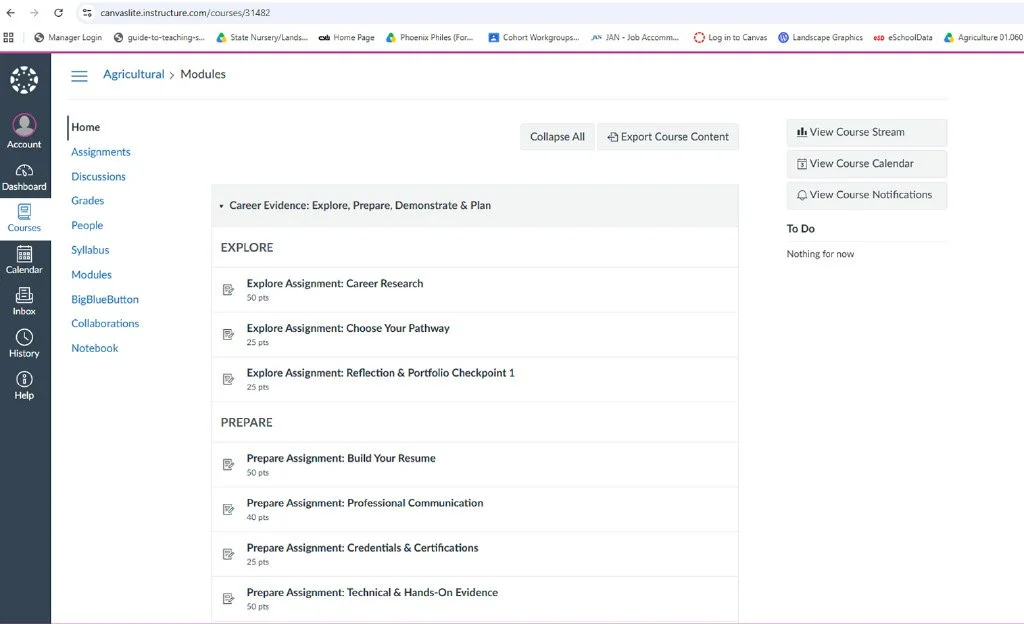
Canvas Lite Image
Purposeful, Authentic Learning
My philosophy of learning design and technology is grounded in the belief that learning should be purposeful, accessible, authentic, and connected to what learners will actually need to do beyond a course. Technology should support that goal rather than become the goal itself. Across my instructional design program, I have become more deliberate about beginning with learner needs, outcomes, and context before selecting a platform or media tool. ADDIE has strengthened that habit by reminding me to analyze before designing, build with a clear implementation context, and evaluate after learners interact with the experience. In practice, effective design means aligning objectives, authentic practice, feedback, assessment, accessibility, and technology so the learner experiences one coherent path rather than a collection of unrelated activities.
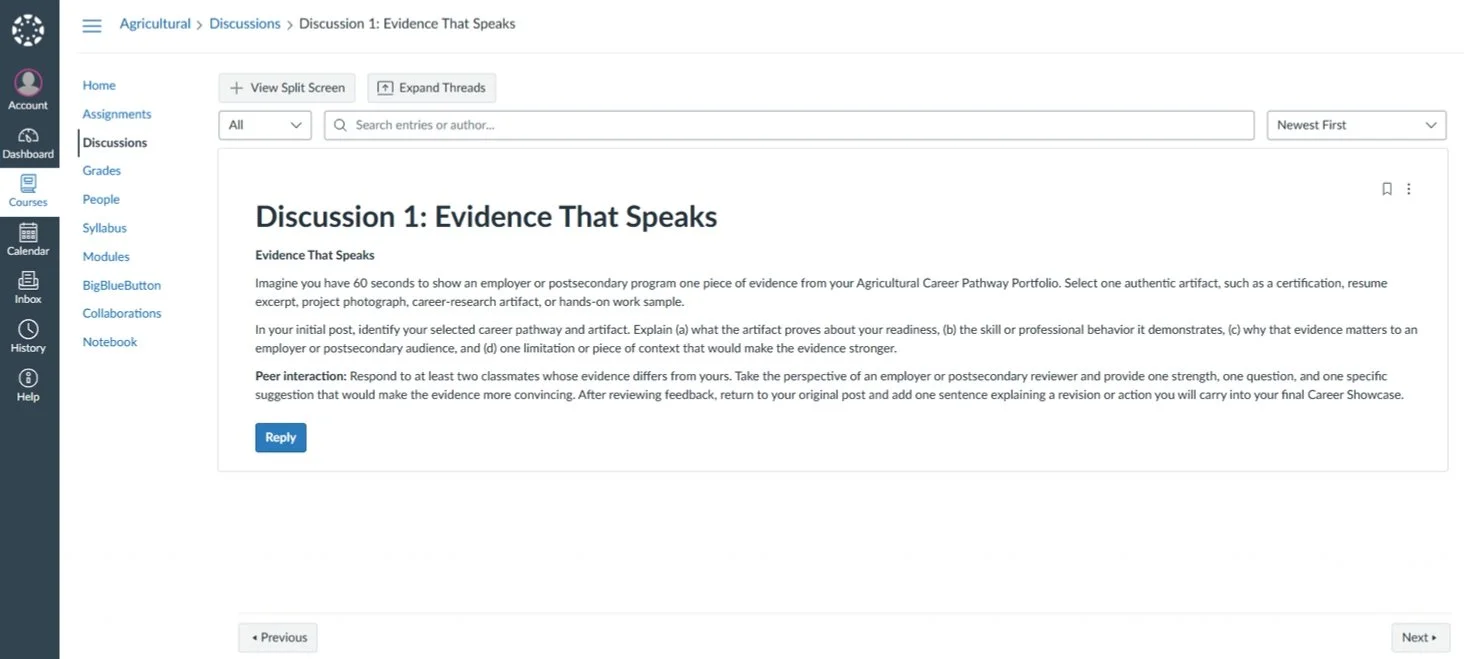
Canvas Lite Discussion Page
Community, Interaction, and Feedback
The Community of Inquiry framework shapes how I design online interaction because meaningful learning depends on cognitive, social, and teaching presence working together (Garrison et al., 2000). In my Agricultural Job Exploration work, students do not simply post an answer and respond with agreement. They evaluate career-readiness evidence, explain why it matters to an employer or postsecondary program, compare perspectives, and revise their thinking after feedback. Fiock (2020) emphasizes purposeful interaction structures and explicit guidance for online communities. Those ideas have changed how I write discussion prompts and peer-response expectations. I want interaction to produce a useful next action: a stronger artifact, a clearer explanation, a revised career goal, or a better decision. Formative feedback serves the same purpose. Coaching questions and opportunities to retry are more valuable to me than immediately revealing the correct answer because they preserve learner agency while still providing support.
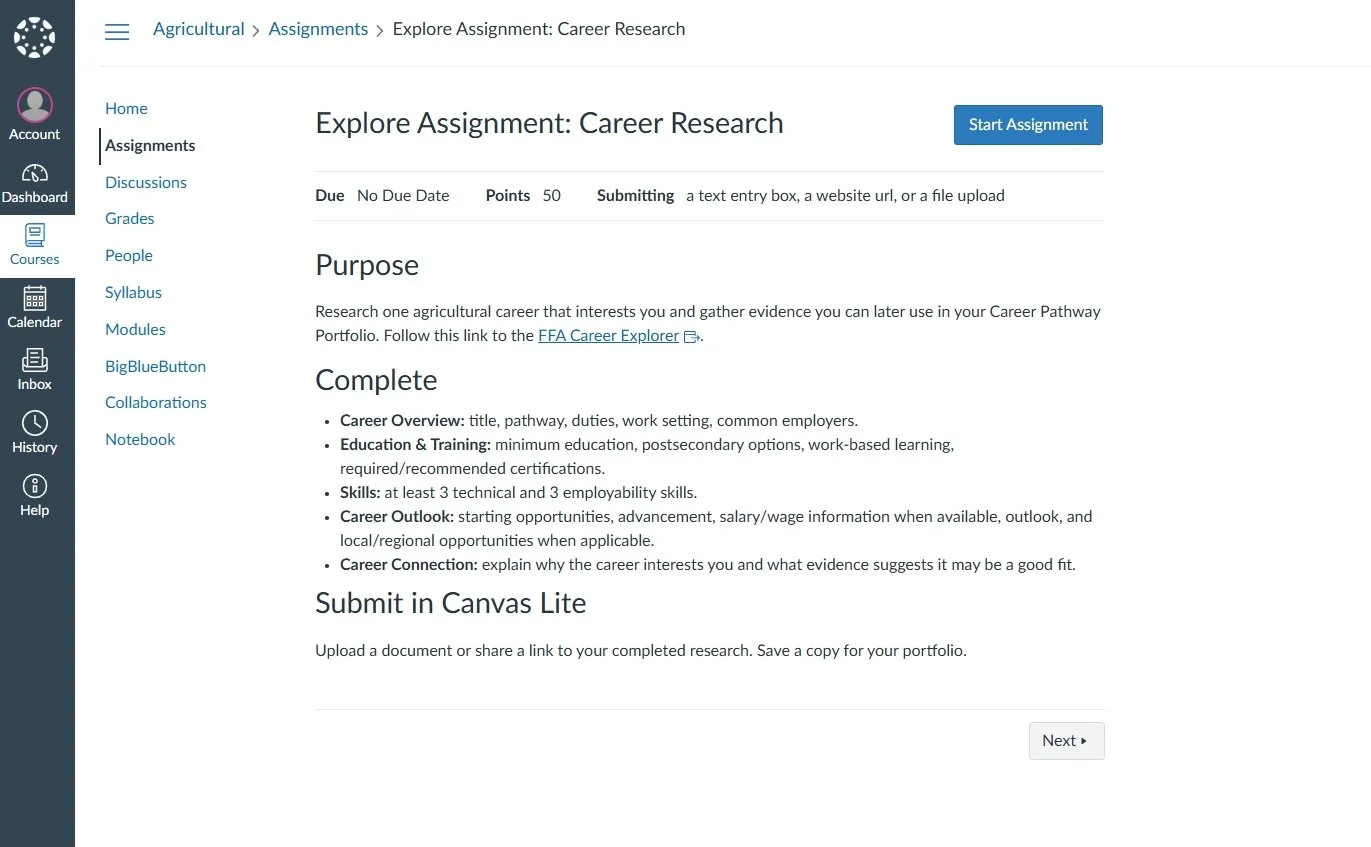
Accessibility in Canvas Lite Assignments
Access by Design
Universal Design for Learning has become central to my approach because accessibility should be planned from the beginning, not added after development. CAST's UDL Guidelines emphasize multiple means of engagement, representation, and action and expression while reducing unnecessary barriers (CAST, 2024). I applied this thinking in the Agricultural Career Pathway Portfolio Evidence Guide, the From Evidence to Employment animated video, and the Genially Career Showcase Evidence Mission. Across those resources, I used consistent visual cues, readable layouts, concise language, captions when narration was present, alternatives to drag-and-drop, and more than one way to access directions. In Canvas Lite, essential directions and submission expectations remain on the course page while longer examples and optional supports are linked. This approach supports Chromebook and mobile users and reduces the number of places learners must search for required information.
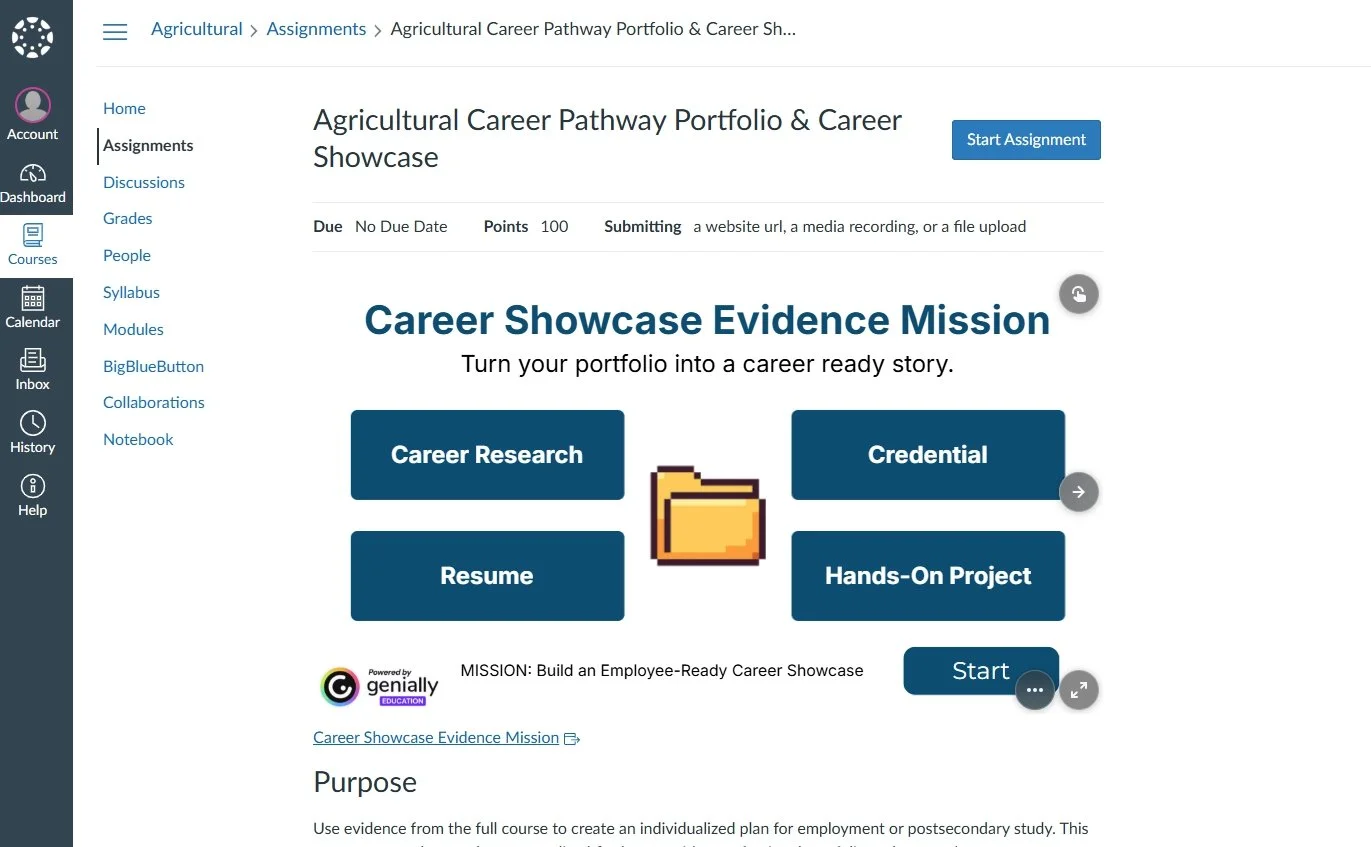
Career Showcase Evidence Mission Embedded into Canvas Lite Assignments
Technology With Intent
My view of educational technology has become increasingly selective. A more advanced tool does not automatically create a better experience. I initially planned to build my interactive career-readiness activity in Articulate Storyline 360 because of its variables and branching capabilities. I later moved to Genially because it provided the interactions I needed in a free, reusable, web-based format that better matched organizational constraints. Student-generated responses, reflections, and portfolio evidence were then routed through Canvas Lite, which became the central location for submission and instructor feedback. That decision reflects a core belief: choose technology according to instructional purpose, learner access, sustainability, and maintainability. External tools should be used when they add meaningful interaction; the LMS should remain the stable home base. My Explore-Prepare-Demonstrate-Plan structure applies that principle by giving students predictable navigation while allowing specialized tools to serve clearly defined roles.
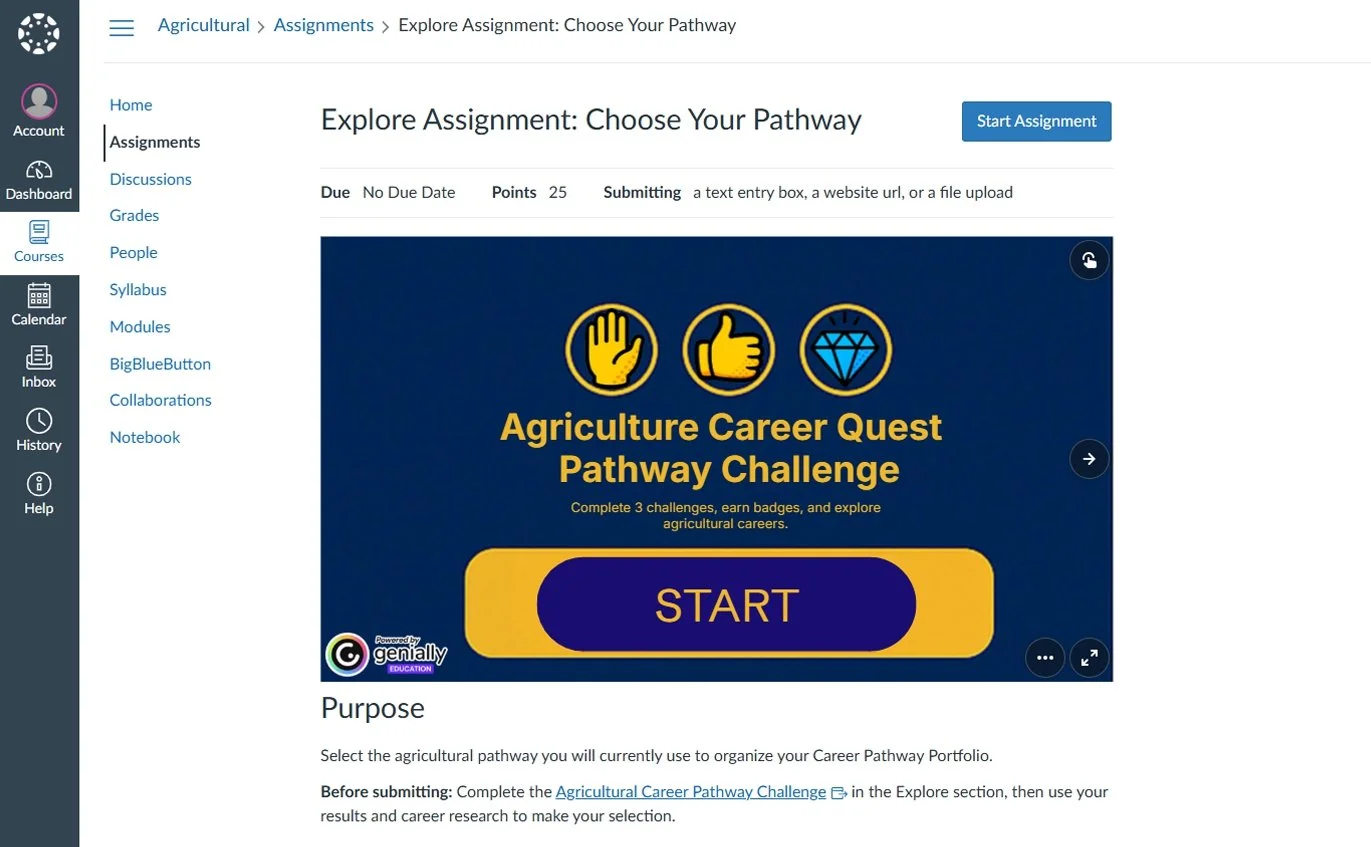
Career Research in Action
Assessment, Relevance, and Adult Learning
Authentic assessment is another consistent pattern in my work. I value tasks that ask learners to use knowledge in realistic professional contexts instead of reproducing isolated facts. Authentic assessment is strongest when the task, physical or social context, output, and criteria resemble the competencies learners will use beyond school (Gulikers et al., 2004). The Agricultural Career Pathway Portfolio and Career Showcase ask students to curate evidence, explain technical and employability skills, identify an area for growth, and build a realistic 6- to 12-month plan. My understanding of adult learning also reinforces the importance of relevance, experience, autonomy, and immediate application. Merriam (2001) describes adult learning as closely connected to self-direction and prior experience. Although many of my current learners are high-school CTE students, I am preparing them for adult roles. Giving them meaningful choice, authentic audiences, and opportunities to connect current evidence to employment, credentials, or postsecondary study helps make that transition visible.
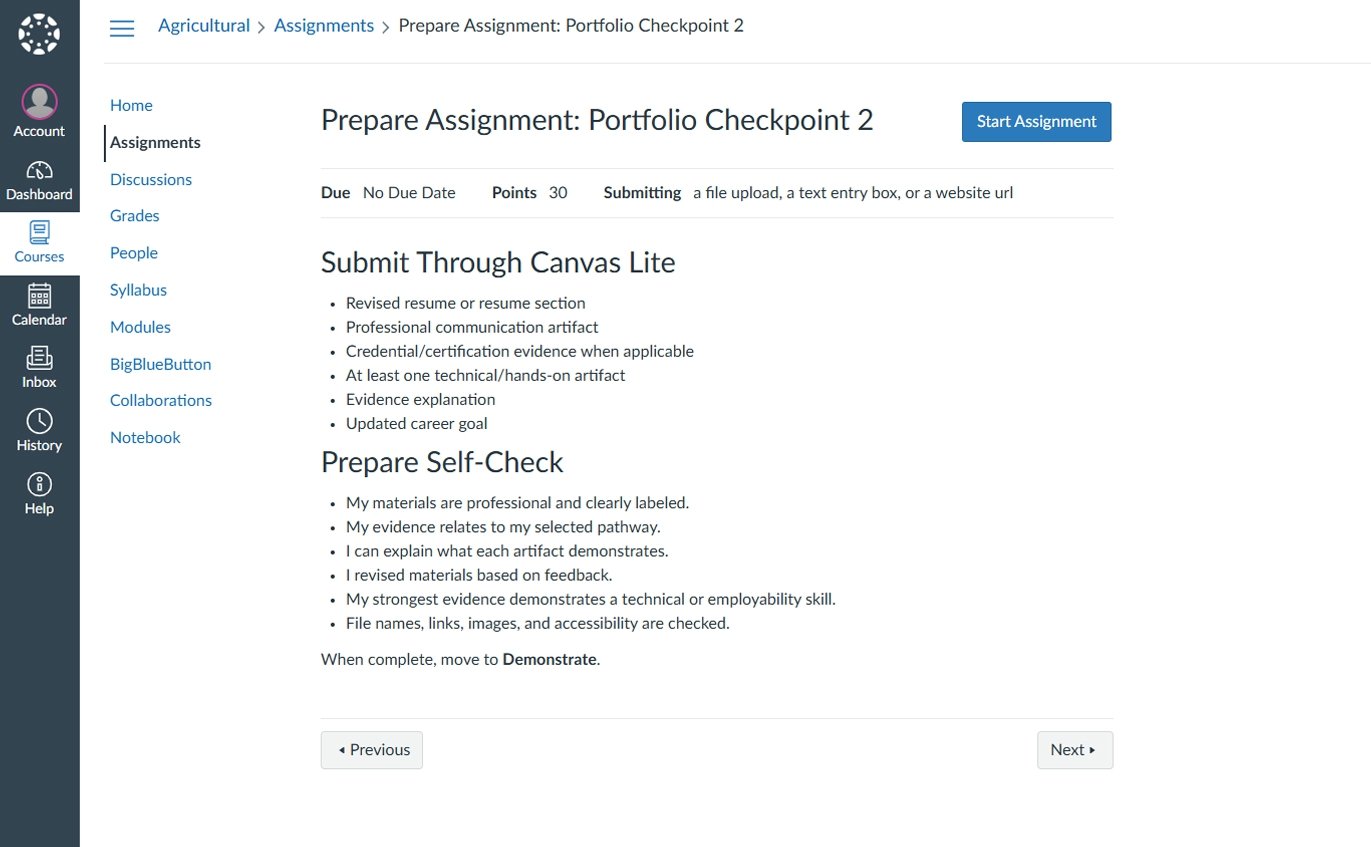
Portfolio Building, Frequent Checks and Accessibility
Growth, Leadership, and Continuous Improvement
I believe quality learning design is iterative. A resource is not finished because it looks complete; it must function, remain accessible, and support the intended outcome. QA checklists, peer review, student pilot feedback, and revision cycles are part of my normal design process. My Canvas Lite course reflects this philosophy by using consistent naming, concise pages, milestone checklists, accessible media, direct links as fallbacks for embeds, and a full student-path review before publication. I also view adaptability as a professional responsibility. Platforms, AI capabilities, and workplace expectations will continue to change. My leadership as a learning designer depends less on loyalty to one tool than on the ability to evaluate new tools ethically, preserve learner voice, reduce barriers, and keep the learning purpose clear. My philosophy is therefore a commitment to evidence-informed, learner-centered design that connects theory to professional practice and continues to evolve through reflection, feedback, and responsible experimentation.
References
CAST. (2024). CAST Universal Design for Learning Guidelines version 3.0. https://udlguidelines.cast.org/
Fiock, H. (2020). Designing a community of inquiry in online courses. The International Review of Research in Open and Distributed Learning, 21(1), 135-153. https://doi.org/10.19173/irrodl.v20i5.3985
Garrison, D. R., Anderson, T., & Archer, W. (2000). Critical inquiry in a text-based environment: Computer conferencing in higher education. The Internet and Higher Education, 2(2-3), 87-105. https://doi.org/10.1016/S1096-7516(00)00016-6
Gulikers, J. T. M., Bastiaens, T. J., & Kirschner, P. A. (2004). A five-dimensional framework for authentic assessment. Educational Technology Research and Development, 52(3), 67-86. https://doi.org/10.1007/BF02504676
Merriam, S. B. (2001). Something old, something new: Adult learning theory for the twenty-first century. New Directions for Adult and Continuing Education, 2001(89), 93-96. https://doi.org/10.1002/ace.12